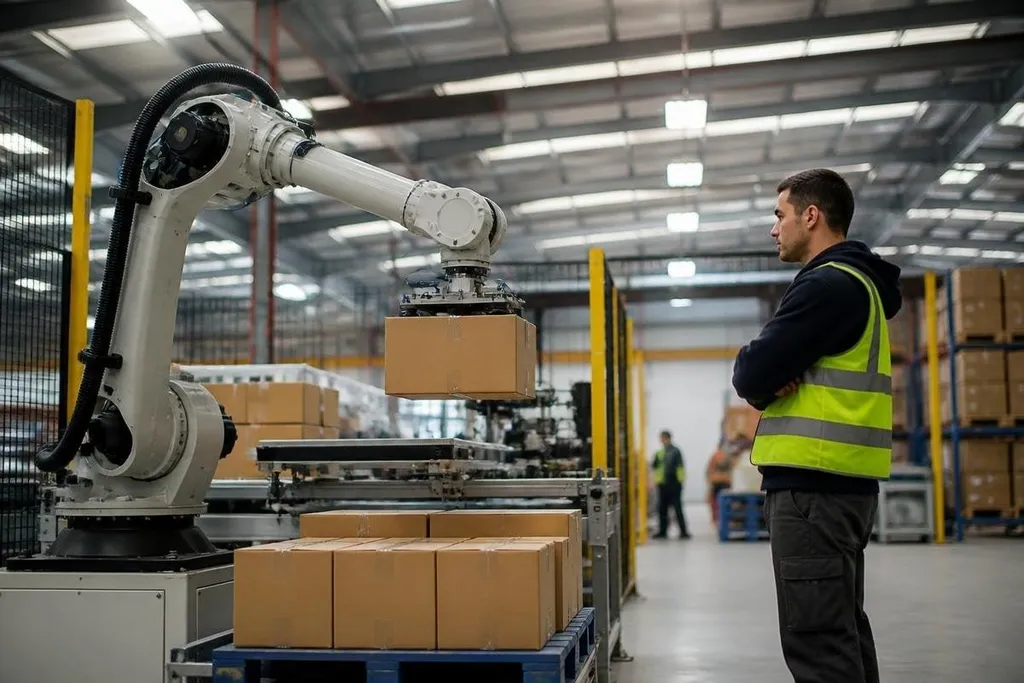
Robots can raise output without raising every worker’s pay. The effect on income inequality will depend on who owns the machines, which tasks they replace, and how quickly workers can move into new jobs.
- Robot owners may collect more income as machines take on paid tasks.
- Workers with repair, software, and control skills may gain bargaining power.
- Regions that lose routine work may feel the change before new jobs arrive.
The first gains go to owners
A company buys a robot when it expects the machine to do useful work for less than the cost of people doing the same task.
The robot may sort parcels, weld parts, inspect products, or move stock through a warehouse. If the system works as planned, the company can produce more with the same staff or run with fewer staff.
That creates a direct question about income. The extra money may go to shareholders, company owners, or workers who can operate and repair the system. It won’t reach everyone who used to do the task unless pay, training, or ownership changes as well.
This pattern can widen the gap between people who own productive assets and people who sell their time. The machine matters, but the contract around the machine matters more.
Which workers gain
Robots still need people to install them, set task rules, check output, repair faults, and make changes when the worksite shifts. Those jobs need a mix of mechanical knowledge, software skills, and an understanding of the process being automated.
Someone who can fix a failed gripper may have more bargaining power than a worker whose task has been reduced to watching a screen. That shift won’t happen evenly. A small factory may need one controls technician, while several operators lose routine tasks.
Training can help, but a short course cannot remove every barrier. A worker may lack paid study time, live far from a training center, or need a wage during the change. Companies that buy robots also decide whether those workers get a path into the new roles.
Income effects need more than a forecast. Robotics reporting on changing work can tie a claim to a named machine, company, task, and rollout date, giving you a way to see who gains income and who loses work. Those details matter most when the first effects appear in one town or industry.
Why local effects may arrive first
Income inequality is shaped by place as well as by job title. A town with several factories may lose routine production work before it gains firms that design, service, or sell robotic systems.
The new jobs may also appear elsewhere. Robot makers, software teams, and system integrators often work near technical suppliers and research centers, while automated sites can sit closer to ports, farms, or large customers. A worker cannot always follow the job without leaving their home, family, or local support network.
This timing matters. A company may gain from automation in a few months, while a worker may need years to train for a different role. A region can carry that gap through lower wages, fewer local services, and weaker demand from households.
The policy choices that shape the result
Robotics does not decide the income split by itself. Governments and companies can change who receives the gains through tax rules, worker training, wage agreements, and access to machine ownership.
Workers may gain a stronger position when they help set automation plans, receive paid training, or share in the savings from higher output. Small firms may need public loans or shared technical centers if robot ownership is limited to large companies.
The strongest case for automation is not a promise that every lost task will return as a better job. It is a plan that gives affected workers time, income, and a real route to the work created around the machines.
A practical test for any robotics plan
Use these checks before judging whether an automation project will widen or narrow the income gap:
- Name the task: Which paid task will the robot take on, and how many hours does it cover?
- Track the money: Who receives the savings from higher output or lower labor costs?
- Count the new roles: How many jobs will install, run, repair, or improve the system?
- Check the route in: What paid training and work time will current staff receive?
- Measure the place: Will new jobs appear near the workers who lose routine tasks?
I think the deciding issue is ownership, not the robot’s shape or level of autonomy. If machine gains flow mainly to owners while workers carry the cost of retraining, robotics will widen income inequality; if workers share the gains and get time to move, the same machines can raise wages without leaving them behind.